If you're planning to build a custom home, energy efficiency is probably on your list. But most of what gets marketed as "green building" focuses on a single product or feature, when the reality is that a truly energy-efficient home is the result of many decisions working together as a system.
As a luxury custom home builder, we think about energy efficiency from the very first conversation with a client. It isn't an add-on. It's baked into how we design, specify, and build. Here's what actually makes a home energy efficient, and why it matters more in a custom home than anywhere else.
It Starts Before the Foundation: Orientation and Siting
One of the most powerful energy efficiency strategies costs nothing. It's how your home sits on the lot.
A home that is oriented to maximize southern exposure in winter and minimize direct western sun in summer can meaningfully reduce heating and cooling loads before a single system is installed. Overhangs, window placement, and the position of living spaces relative to the sun all play a role.
This is one of the clearest advantages of working with a luxury custom home builder rather than buying a production home. In a production neighborhood, the lots are laid out and the floor plans are fixed. In a custom build, we can orient your home to work with your specific site, your climate, and your lifestyle.
The Envelope: Where Most Energy Is Won or Lost
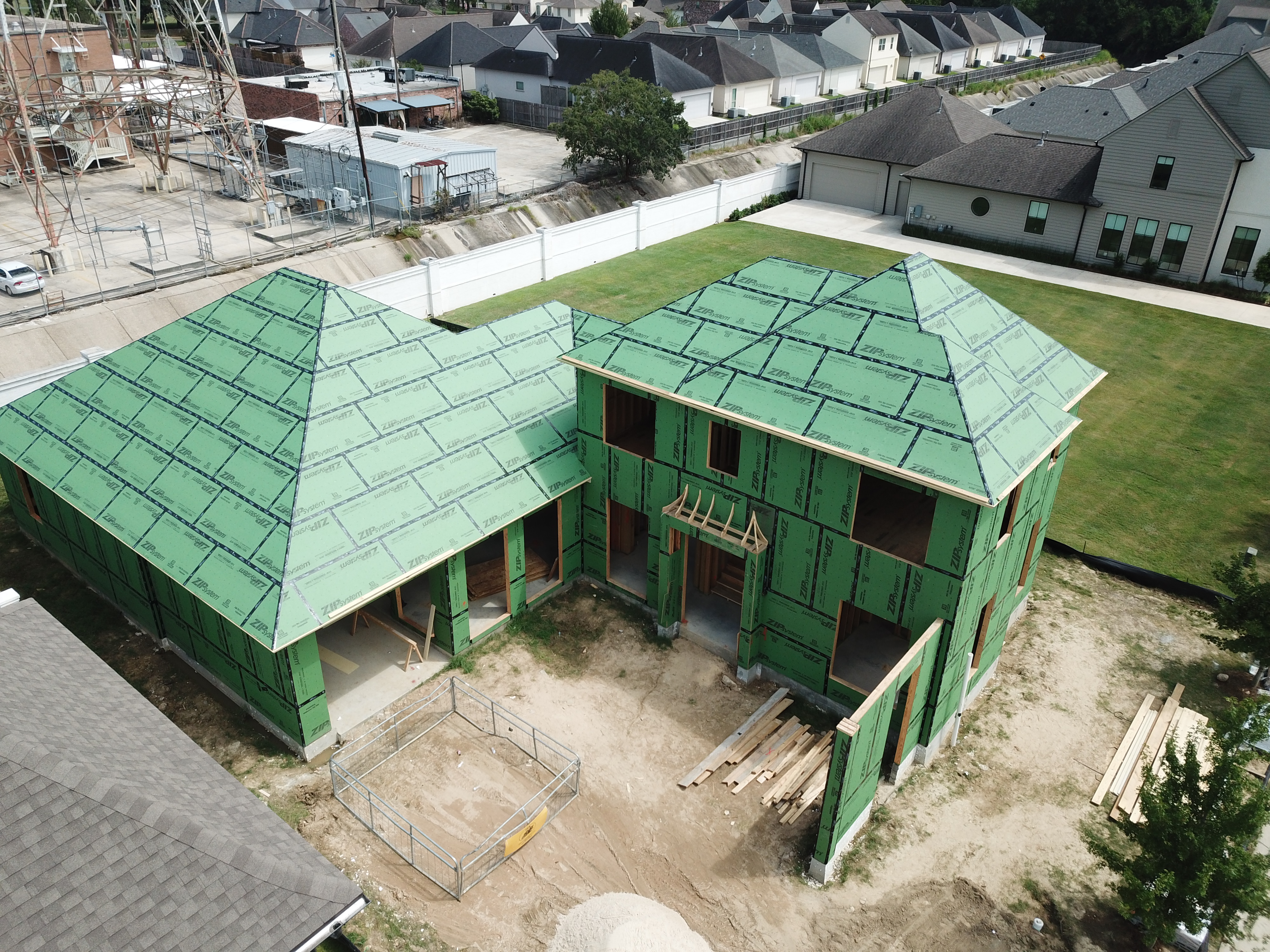
In building science, the "envelope" refers to everything that separates the conditioned interior of your home from the outside world: walls, roof, foundation, windows, and doors. This is where energy efficiency is either built in or left out.
Air Sealing
This one is invisible, undervalued, and arguably the most important factor in energy performance.
A home can be loaded with high-R insulation and still hemorrhage energy if it leaks air. Every penetration, every seam, every electrical box in an exterior wall is a potential leak point. In a poorly sealed home, you're not just losing conditioned air. You're also pulling in unconditioned, potentially humid outside air that leads to moisture problems, comfort issues, and poor indoor air quality.
We air-seal meticulously during framing, before drywall, and at every penetration. We also test our homes with a blower door test to verify performance. If the numbers aren't there, we find out why and fix it before the walls are closed.
Windows and Doors
Windows are a significant source of heat gain and heat loss in any home. In a luxury custom home, windows are also a major design feature, which means the stakes are higher.
We specify windows by their performance ratings for your specific climate, not just by how they look in a showroom. Key metrics include U-factor (heat transfer), Solar Heat Gain Coefficient (SHGC), and condensation resistance. We also pay close attention to how windows are installed and flashed, because a premium window installed poorly will fail over time.
Mechanical Systems: Efficiency That You Feel Every Day
Once the envelope is tight and well-insulated, your mechanical systems don't have to work as hard. That means you can right-size your HVAC system rather than oversizing it, which is one of the most common and costly mistakes in new construction.
HVAC
A high-performance home calls for a high-performance mechanical system. Modern heat pumps, particularly cold-climate heat pumps, can deliver exceptional heating and cooling efficiency across a wide range of outdoor temperatures. Properly designed duct systems, or better yet ductless systems, eliminate one of the biggest sources of energy loss in conventional homes.
Manual J load calculations, not rules of thumb, should determine your system size. An oversized system short-cycles, fails to dehumidify, wears out faster, and costs more to operate.
Ventilation
A tight home needs a ventilation strategy. This is where many builders who brag about air sealing fall short.
Energy Recovery Ventilators (ERVs) and Heat Recovery Ventilators (HRVs) bring fresh outdoor air into the home while capturing the energy from the exhaust air stream. The result is consistent fresh air without the energy penalty of simply opening a window. In a luxury custom home, this system should be engineered as part of the mechanical design, not bolted on at the end.
Water Heating
Water heating accounts for a significant portion of a home's energy use. Tankless water heaters, heat pump water heaters, and solar thermal systems each offer meaningful efficiency gains over conventional tank systems. The right choice depends on your home's design and your household's hot water habits.
Lighting and Appliances: The Low-Hanging Fruit
LED lighting across the home is a given at this point. The bigger conversation in a luxury custom home is usually around appliances. ENERGY STAR certification is a useful baseline, but induction cooking, heat pump dryers, and other modern appliances can offer substantial efficiency improvements over their conventional counterparts.
Smart Home Integration and Energy Monitoring
A luxury custom home increasingly includes a home automation system. When that system includes energy monitoring, you gain real-time visibility into how your home is performing. Smart thermostats, occupancy sensors, automated shades, and whole-home energy monitors all contribute to a home that responds intelligently to how you live in it.
Future-Proofing: Solar, EVs, and What's Next
Even if you aren't ready to install solar panels on day one, a forward-thinking luxury custom home builder will make your home solar-ready from the start. That means conduit runs, panel capacity, and roof orientation that make a future installation straightforward and affordable.
EV charging is rapidly becoming a standard expectation in custom home construction. A dedicated 240V circuit or two, roughed in during the build, is a fraction of the cost it would be to add later.
The System Perspective: Why It All Has to Work Together
The single most important thing to understand about home energy efficiency is that it's a system. The insulation affects what size mechanical equipment you need. The air sealing affects the ventilation strategy. The window performance affects the heating load. The orientation affects all of it.
This is why energy efficiency in a custom home is not about picking the highest-rated product in each category. It's about designing an integrated building system where every component is chosen with the whole in mind.
As a luxury custom home builder, this integrated thinking is what we bring to every project. We don't just build beautiful homes. We build homes that perform, and that keep performing for as long as you live in them.
Ready to Build a Home That Works as Well as It Looks?
Burns Built specializes in luxury custom home construction with a deep commitment to building science, quality, and craftsmanship. If you're exploring what it means to build a custom home that is beautiful, efficient, and built to last, we'd love to have that conversation.