
Brick has long been one of the most timeless and durable exterior materials in Southern architecture. While traditional painted brick remains popular, many architects and high end builders are increasingly turning to sack finish brick for its softer texture, natural movement, and breathable finish.
Although the two can appear similar from a distance, the application process, texture, performance, and long-term aging characteristics are very different.
What Is a Sack Finish?
A sack finish is a thin mortar slurry or cement based coating hand applied over brick to partially conceal imperfections while still allowing the texture and character of the masonry to show through. The finish is traditionally rubbed or “sacked” onto the brick using burlap sacks, sponges, brushes, or trowels, which is where the name originates.
Depending on the region or installer, sack finish may also be referred to as:
German smear
Slurry coat
Mortar wash
Rubbed mortar finish
Smudged brick
Bagged brick
Lime slurry finish
While some of these techniques vary slightly in application and appearance, they all share a similar goal: softening the appearance of brick while maintaining depth and texture.
The Texture Difference
One of the defining characteristics of a sack finish is its texture.
Traditional painted brick creates a more uniform and consistent surface. Paint tends to flatten the visual depth of the masonry by coating the brick and mortar evenly. While this can create a clean aesthetic, it often removes much of the natural variation and character that makes brick appealing in the first place.
A sack finish behaves differently.
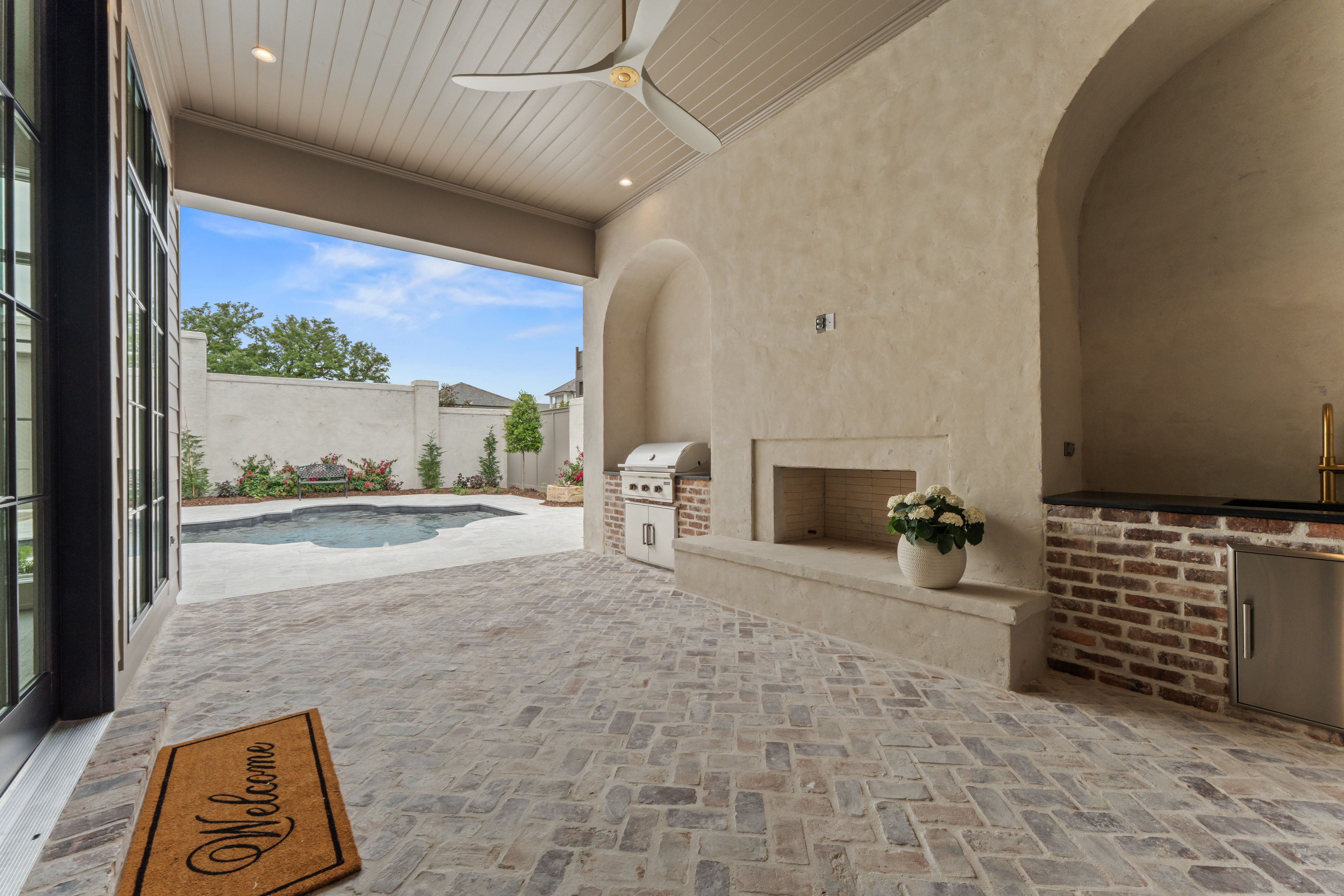
Because the mortar slurry is hand applied and imperfect by nature, the finish allows portions of the brick texture, edges, and color variation to remain visible beneath the coating. This creates movement, shadow, and depth that changes throughout the day depending on lighting conditions.
Rather than appearing heavily coated, sack finish brick tends to feel integrated into the masonry itself.
This is one reason the finish is commonly associated with European architecture, old Louisiana homes, English cottages, and Mediterranean influenced designs.
Breathability and Moisture Performance
One of the most overlooked differences between sack finish and traditional exterior paint is breathability.
Brick is naturally porous. It absorbs and releases moisture over time through a process often referred to as vapor permeability. Allowing masonry to breathe properly is especially important in humid climates like South Louisiana.
Traditional masonry paint can sometimes trap moisture within the wall assembly, particularly if lower quality products or improper preparation methods are used. Over time, trapped moisture can contribute to peeling paint and blistering.
A properly applied sack finish, particularly one using lime-based materials or breathable masonry coatings, generally allows for greater vapor permeability than conventional paint systems.
This means the wall can release moisture more naturally while still achieving a softened, refined appearance.
The finish also tends to age more gracefully. Instead of peeling in sheets like paint, sack finishes often develop subtle patina and character over time.
Why Many Luxury Homes Are Moving Toward Sack Finish
In high end residential construction, the trend has shifted away from overly flat and uniform exteriors. Designers and homeowners are increasingly drawn to materials that feel authentic, tactile, and layered.
At Burns Construction Group we believe exterior materials should feel authentic and enduring. Whether using natural brick, sack finish, lime-based coatings, or reclaimed architectural elements, our focus is always on creating homes with depth, permanence, and character that improve with age.